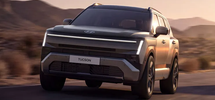
2027 Hyundai Kona arrives as a gasoline-powered small SUV with four U.S. trims, two engine choices, available HTRAC all-wheel drive, and a starting MSRP of $25,500. Its formula emphasizes efficiency, technology, practicality, and flexible equipment.
For shoppers researching the 2027 Hyundai Kona, the key details are already unusually clear: the 147-horsepower 2.0-liter engine returns on lower trims, while a 190-horsepower turbocharged 1.6-liter powers upper versions, with fuel economy reaching 35 mpg highway.
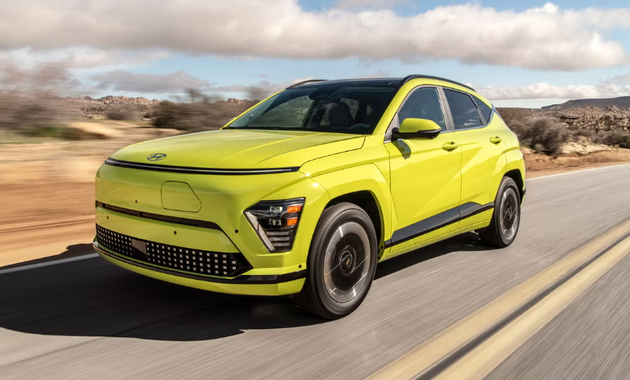
What’s New for 2027?
The 2027 Kona lineup is officially listed with SE, SEL Sport, SEL Premium, and Limited trims. Hyundai has also reshaped the naming structure around its available equipment, while retaining front-wheel drive as standard and HTRAC AWD across the range.
Pricing starts at $25,500 for the SE, followed by $26,825 for SEL Sport, $28,425 for SEL Premium, and $32,535 for Limited. Those figures exclude freight, taxes, title, license fees, and other dealer charges.
Engines, Transmissions, and Fuel Economy
SE and SEL Sport models use a 2.0-liter MPI four-cylinder producing 147 horsepower and 132 pound-feet of torque, paired with Hyundai’s IVT. SEL Premium and Limited models receive a turbocharged 1.6-liter four-cylinder making 190 horsepower.
EPA estimates reach 28 mpg city, 35 highway, and 31 combined with front-wheel drive on the 2.0-liter models. AWD lowers those figures to 26/29/27, while turbocharged versions achieve 26/32/28 FWD or 24/29/26 AWD.
Design, Space, and Everyday Practicality
The Kona measures 171.3 inches long and 71.9 inches wide, with a 104.7-inch wheelbase. Depending on trim and drivetrain, height ranges from 62.2 to 63.6 inches, while ground clearance reaches 8.3 inches on turbo AWD models.
Inside, the Kona provides 101.2 cubic feet of passenger volume on most trims and 25.5 cubic feet behind the rear seats. Folding those seats expands cargo capacity to 63.7 cubic feet, supporting commuting, errands, and weekend travel.
Technology and Safety
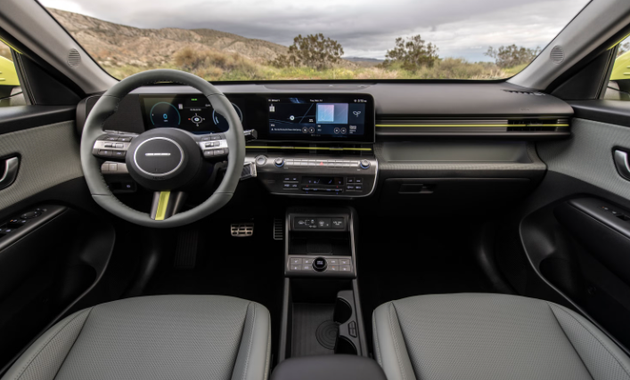
A 12.3-inch touchscreen is standard, alongside wireless smartphone integration and Smart Cruise Control with Stop and Go. Higher trims add features such as wireless phone charging, a hands-free smart liftgate, surround-view monitoring, and a blind-spot view camera.
Hyundai’s SmartSense package is comprehensive across the lineup, with standard forward collision avoidance, lane following and lane keeping assistance, blind-spot collision warning, rear cross-traffic collision avoidance, safe exit warning, and driver attention monitoring.
Trim Strategy
The SE concentrates on core value with the 147-horsepower engine, 12.3-inch touchscreen, wireless smartphone integration, and available AWD. SEL Sport adds visual upgrades including 18-inch black alloy wheels, gloss-black exterior details, and wireless charging.
SEL Premium and Limited switch to the 190-horsepower turbo engine and eight-speed automatic transmission. Limited adds higher-end equipment including a hands-free liftgate, surround-view monitor, blind-spot view monitor, and Remote Smart Parking Assist.
How the 2027 Kona Fits?
With its compact footprint, available AWD, strong technology provision, and two gasoline engines, the 2027 Kona targets buyers wanting SUV versatility without moving into a larger crossover. Its shopping alternatives include models such as the Kia Seltos and Chevrolet Trax.
For buyers comparing the lineup, the central decision is straightforward: lower trims prioritize fuel economy and affordability, while turbocharged versions emphasize stronger output and additional convenience equipment. AWD remains available throughout, giving every trim greater configuration flexibility.
The 2027 Hyundai Kona is a practical small SUV with clearly defined trims, competitive fuel economy, available AWD, and substantial standard safety technology. Its combination of compact dimensions and flexible powertrains makes it suited to everyday urban and suburban driving.