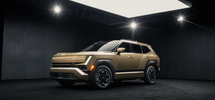
The 2027 Hyundai Tucson enters its fifth generation with a dramatic redesign, adopting a boxier profile, larger dimensions, new lighting signatures, and a technology-focused cabin that significantly separates it from the outgoing SUV.
Hyundai has officially confirmed an all-new Tucson and Tucson Hybrid for initial-market launches in the fourth quarter of 2026. However, North American pricing, final trims, and complete market-specific specifications remain unconfirmed.
A Completely New Tucson for 2027
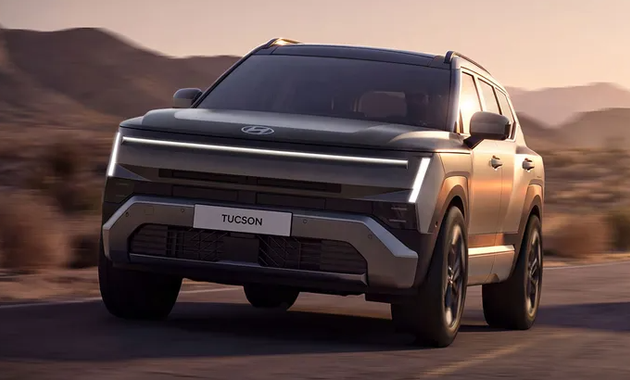
The biggest change is generational rather than cosmetic. Hyundai moves the Tucson into a fifth-generation design featuring its “Art of Steel” philosophy, with stronger geometric surfaces and a more upright stance inspired by the brand’s latest design direction.
The redesigned SUV measures 4,700 mm long, 1,905 mm wide, and 1,685 mm tall, with a 2,785-mm wheelbase. Compared with its predecessor, length increases 60 mm, width grows 40 mm, and wheelbase expands 30 mm.
Rugged Exterior Design and XRT Variant
Visually, the 2027 Hyundai Tucson abandons much of the previous generation’s heavily sculpted appearance for a squarer body, pronounced fender shapes, vertical lighting elements, and distinctive H-shaped front and rear lighting signatures connected by horizontal light bars.
Hyundai has also shown an XRT variant with a more rugged appearance, including unique bumpers, skid-plate styling, contrasting wheel-arch treatments, and tougher exterior details. This gives the Tucson a stronger adventure-oriented identity than before.
More Spacious Interior and New Infotainment
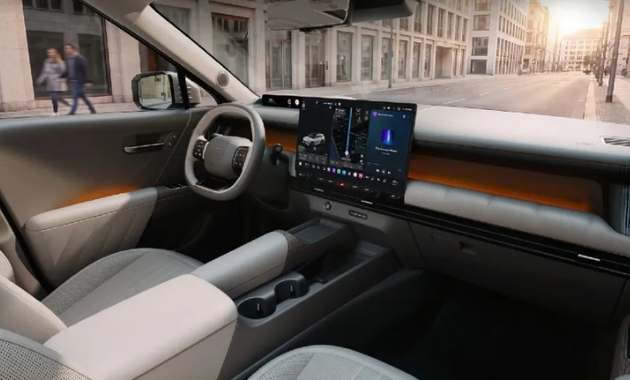
The cabin receives an equally substantial transformation, replacing the outgoing dashboard design with a flatter, cleaner layout centered around a large display and Hyundai’s newer Pleos Connect infotainment system. A redesigned steering wheel completes the modernized cockpit.
Additional exterior dimensions translate into greater passenger usability. Hyundai’s redesigned Tucson gains 29 mm of rear headroom, while rear doors can open to 83 degrees, compared with 73 degrees previously, making second-row access easier.
2027 Tucson Hybrid Powertrain
Hyundai has confirmed that the new Tucson Hybrid will use its TMED-II front-wheel-drive hybrid architecture, combining a 1.6-liter turbocharged gasoline engine with two electric motors. The system is reported at 180 kW and 380 Nm in Hyundai’s latest product-roadmap presentation.
Hyundai has also indicated that the new hybrid system targets stronger performance and efficiency, with reported acceleration from zero to 100 km/h in 8.5 seconds and claimed consumption of 5.7 L/100 km for the disclosed configuration.
Gasoline, Hybrid and Plug-In Hybrid Availability
The hybrid is officially part of Hyundai’s upcoming Tucson product plan, but complete global powertrain details remain market-dependent. Hyundai has not yet published a comprehensive U.S. specification sheet covering every engine, transmission, drivetrain, or electrified variant.
For reference, the current U.S.-market Tucson lineup includes gasoline, hybrid, and plug-in hybrid models, but those specifications should not automatically be applied to the redesigned 2027 Tucson until Hyundai confirms North American configurations.
Technology and Practicality
Technology is expected to be a major selling point because the fifth-generation Tucson introduces a substantially redesigned cockpit rather than simply updating the outgoing infotainment system. The new interface, larger display presentation, and revised controls give the SUV a more contemporary character.
Practicality remains central to the Tucson formula, with the larger body and longer wheelbase designed to improve passenger space. The wider rear-door opening should also benefit families installing child seats or carrying passengers who need easier access.
Price and Release Date
Hyundai has not announced U.S. pricing for the 2027 Tucson, so estimates circulating online should not be treated as official MSRP. The current 2026 Tucson starts at $29,700 in the United States, providing useful context but not a confirmed 2027 price.
Hyundai’s latest corporate roadmap confirms that the all-new Tucson and Tucson Hybrid will begin launching in initial markets during the fourth quarter of 2026. Exact U.S. availability, final trims, pricing, and EPA ratings remain to be announced.
2027 Hyundai Tucson vs. the Competition
The redesigned Tucson enters a highly competitive compact-SUV segment that includes the Toyota RAV4, Honda CR-V, Kia Sportage, Volkswagen Tiguan, and Subaru Forester. Its larger body, distinctive styling, and new hybrid architecture could strengthen Hyundai’s position.
For buyers researching the next Tucson, the most important takeaway is that this is a genuine generational change rather than a routine refresh. Final market-specific specifications will determine how compelling it becomes once sales details are officially announced.
The 2027 Hyundai Tucson stands out with its radical new design, increased interior dimensions, XRT variant, and confirmed next-generation hybrid technology. Until North American specifications arrive, buyers should treat pricing, trims, and EPA figures as unconfirmed.