The 2027 BMW X3 is expected to continue the fourth-generation compact luxury SUV introduced for 2025, emphasizing balanced performance, everyday practicality, modern technology, and a choice of turbocharged mild-hybrid powertrains.
Because BMW has not announced a major 2027 redesign for the gasoline X3, current information points toward an evolutionary model year rather than another transformation, while the separate electric iX3 moves toward BMW’s newer Neue Klasse technology.
What’s Expected to Change?
The fourth-generation X3 arrived for 2025 with a substantially revised exterior, cabin, chassis, and technology package. For 2027, reputable industry reporting expects only limited changes, although BMW could adjust equipment, colors, wheels, or packaging.
That restrained approach makes sense because the current X3 remains relatively fresh. BMW’s U.S. lineup currently lists the X3 30 xDrive at $51,300 for 2026, while 2027 pricing and exact equipment have not been officially published.
Powertrains and Performance
The current X3 30 xDrive uses a turbocharged 2.0-liter four-cylinder supported by 48-volt mild-hybrid technology, producing 255 horsepower and 295 pound-feet of torque through an eight-speed automatic transmission and all-wheel drive.
The performance-focused X3 M50 xDrive uses a turbocharged 3.0-liter inline-six with mild-hybrid assistance, producing 393 horsepower and 428 pound-feet. It pairs that output with xDrive, an eight-speed automatic transmission, and a sportier chassis setup.
BMW quotes a 6.0-second zero-to-60-mph time for the current X3 30 xDrive, while the M50 delivers substantially stronger acceleration. These figures should be treated as current-model references until BMW publishes definitive 2027 specifications.
Exterior Design and Dimensions
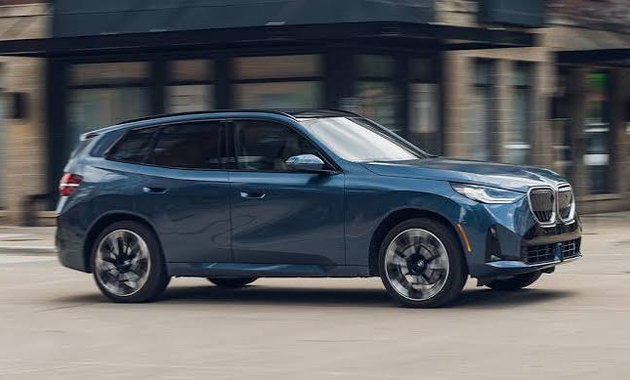
The latest X3 uses a cleaner, more upright exterior with pronounced body surfaces, a broad grille, distinctive lighting, and a squared-off rear treatment. Its styling differs noticeably from the previous generation while retaining recognizable BMW proportions.
Exact 2027 dimensions have not been announced as a separate specification set. The current generation measures roughly 188 inches long and provides a compact footprint suited to urban driving while maintaining useful passenger and cargo capacity.
Interior, Cargo Space, and Technology
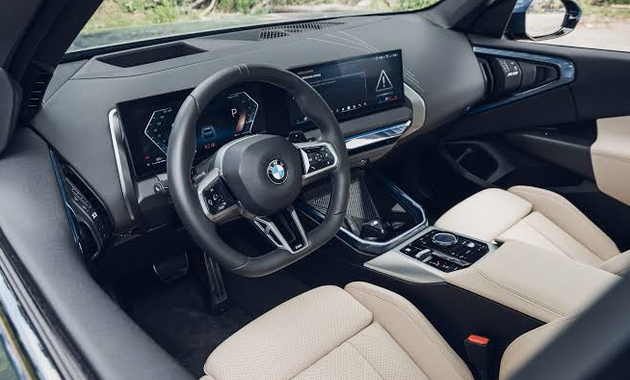
Inside, the X3 adopts BMW’s curved display arrangement, combining a 12.3-inch digital instrument display with a 14.9-inch central touchscreen. Wireless Apple CarPlay and Android Auto, USB-C connectivity, and available Harman Kardon audio enhance usability.
The cabin also emphasizes flexible utility, with seating for five and a cargo area that can expand substantially when the rear seats fold. Exact 2027 upholstery, trim, and standard-equipment details remain subject to BMW confirmation.
Safety and Driver Assistance
BMW equips the current X3 with a broad collection of driver-assistance technologies, while higher equipment levels can add features such as a head-up display, surround-view camera, and additional parking assistance capabilities.
Because BMW can revise standard and optional equipment between model years, buyers should verify the final 2027 configuration rather than assuming every feature from the 2026 X3 will carry forward unchanged.
Price, Availability, and Competitors
BMW has not released an official U.S. MSRP or firm launch timetable specifically for the 2027 X3. Current estimates from automotive publications place the gasoline model near its existing pricing, but those figures are not confirmed BMW pricing.
The X3 competes directly with luxury compact SUVs including the Mercedes-Benz GLC, Audi Q5, Genesis GV70, and Porsche Macan. Its strongest appeal remains the combination of practical SUV packaging, responsive handling, and genuinely strong available performance.
2027 BMW X3 vs. the Previous Model
The biggest transformation already occurred for 2025, when BMW introduced the current fourth-generation X3. Consequently, shoppers moving from a 2024 or earlier X3 will see substantial design and technology changes, while 2026 owners may find 2027 familiar.
For buyers considering the 2027 BMW X3, the key question is therefore not whether BMW has reinvented the SUV, but whether the latest generation’s blend of efficiency, performance, technology, and cargo flexibility fits their priorities.
The 2027 BMW X3 appears positioned as a mature continuation of BMW’s redesigned compact SUV rather than a dramatic new generation. Until BMW confirms final specifications, pricing, and equipment, current-generation details provide the safest buying reference.